

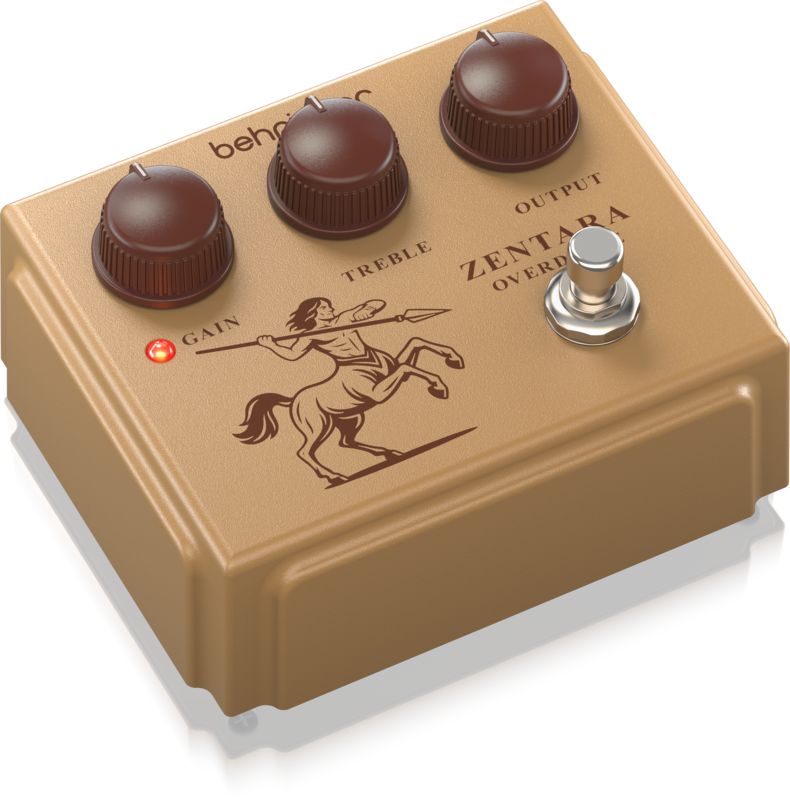
Zentara Overdrive
Analog overdrive pedal for guitarists, built around a dual potentiometer gain control and germanium diodes. It works as a clean boost or as an overdrive that reacts to picking dynamics.
- Transparent boost overdrive pedal
- Dual potentiometer gain control
- Soft-clipping germanium diodes
- High headroom and wide dynamic range
- Works as clean boost or full overdrive
- Responds to picking dynamics
Foto
5Annunci
Ancora nessun annuncio di questo modello
Quando qualcuno venderà un Zentara Overdrive, qui compariranno gli annunci e lo storico delle vendite.
Vendine uno ugualeDescrizione
ZENTARA OVERDRIVE is a guitar overdrive pedal with a transparent circuit. Its gain control uses a dual potentiometer, described as an improved take on the original concentric gain control, with the aim of better reliability and precision. Turned down, the signal stays clean; turned up, more overdrive is blended in.
The pedal has high headroom and soft-clipping germanium diodes, so it responds to picking dynamics. Playing lightly keeps the tone cleaner, while digging in pushes the guitar and amp into stronger overdrive.
Suggested uses include a clean boost for solos, a setting at the edge of amp breakup (gain around 60% with the other controls at noon), and full-gain overdrive for heavy saturation. It sits in front of an amp alongside other pedals in a guitar rig.
Video
Specifiche
- Marca
- Behringer
- Modello
- Zentara Overdrive
- Categoria
- Effetti e pedali
Audio
- Type
- Transparent boost overdrive
- Gain control
- Dual potentiometer
- Clipping diodes
- Soft clipping germanium diodes
- Headroom
- High
- Dynamic range
- Huge
- Dynamic response
- Responds to picking dynamics
- Clean tone
- Completely clean signal at low gain settings
- Overdrive
- More overdrive mixed in as gain is turned up
Physical
- Format
- Guitar effects pedal
- Maker
- Behringer
- Model
- ZENTARA OVERDRIVE
- Intended use
- In front of an amp